

Laranjal Cerquilho

MF Peças

What Is Virtual Bookkeeping and How It Works + Tools

virtual accounting

At the core, a virtual accountant performs a myriad of accounting tasks remotely, leveraging technology to ensure accuracy and efficiency in financial management. For businesses with over $200,000 of monthly expenses, this might offer the type of customization you’d need. Some additional services QuickBooks ProAdvisor you may have access to include inventory tracking, BillPay, CFO services, and tax services. Imagine a business where the owner no longer has to sift through piles of receipts or stress over monthly financial reports. Instead, a virtual accountant seamlessly manages everything from bookkeeping to tax preparation, all from a remote location. This shift isn’t just about convenience; it’s a transformation in how businesses operate.

virtual accounting

Every financial function.

  • Referrals are the most effective marketing tool for virtual bookkeepers and accounts.
  • We empower accounting teams to work more efficiently, accurately, and collaboratively, enabling them to add greater value to their organizations’ accounting processes.
  • Amber’s Accounting & Bookkeeping LLC is the bookkeeper you are looking for.
  • The firm will gather essential information, followed by software setup, data migration, and require access to accounts.
  • The only downside to a virtual accountant is that you can’t have face-to-face meetings with them, although you can engage in face-to-face video meetings.
  • BELAY Financial Solutions stand apart due to our rigorous vetting process, U.S.-based team members, and commitment to long-term relationship building.
  • Providers like Milestone excel in offering tailored accounting solutions designed to meet the unique needs of entrepreneurs and growing businesses, ensuring that you receive top-tier service at a fair price.

Get actionable advice, industry news, and financial strategies from certified professionals. However, many CPA firms often confuse virtual accounting vs. outsourced accounting. Understanding these distinctions is essential to choosing the right model for your firm’s needs. We are committed to streamlining bookkeeping and accounting, and ensuring businesses have access to clear and reliable financial information. In the digital age, online reviews and ratings can greatly aid in selecting the best local accounting service. Platforms such as Google My Business, Yelp, and industry-specific forums offer a wealth of information about customer experiences.
virtual accounting

Audit Services

  • Jason’s firm, Notion CPA, is an accounting firm with a business-first focus.
  • The UAE Corporate Tax is a federal tax on the net profits of businesses.
  • When you get advice and best practices from other virtual accountants who have “been there, done that,” starting and growing your virtual accounting firm will be smooth sailing.
  • It allows users to extract and ingest data automatically, and use formulas on the data to process and transform it.
  • By leveraging virtual accountant services, businesses gain access to expert financial support without the need for in-house teams, helping them stay organized and compliant.

Virtual bookkeeping adds digital, cloud-based tools like BILL to the bookkeeping process, making it easy for a bookkeeper to keep financial records up to date day by day. As a virtual accountant, you can work with companies anywhere—all you need is internet access and the right software to quickly and securely serve small and medium-sized businesses worldwide. AP automation matches completed payments against original invoices and updates your accounting records immediately. The key advantages include reduced late payments, improved accuracy through elimination of manual data entry errors, and streamlined operations that free up valuable time for your AP team. Managing accounts payable and receivable requires careful attention to vendor relationships and customer collections. Virtual bookkeepers process invoices for payment, ensure bills are paid on time to maintain good supplier relationships, and track outstanding customer invoices to improve cash flow.

Which businesses should switch to virtual bookkeeping?

Typically, you’d only get detailed financial statements like this through a CFO — which means Merritt gives you some of the best aspects of having a CFO without the high cost. Our 75-point review highlights virtual accounting what needs improvement for better accuracy and smoother operations. Amber’s Accounting & Bookkeeping LLC is the bookkeeper you are looking for. After being frustrated by several bookkeepers who made a mess of my books, I found Amber who quickly assessed my books and straightened things out–all for a clear price less than I was paying previously. After being frustrated by several bookkeepers who made a mess of my books, I found Amber who quickly assessed my books and straightened things out–all for a clear price less than I was paying previ…

virtual accounting

Every aspect of our work is specially crafted to suit your business and needs.

Virtual bookkeepers have to embrace it to give your business the edge on your competition. To help you stay up to date on all things virtual bookkeeping and accounting, we’ve compiled a shortlist of resources to help you stay up to date with what’s going on in the industry. You can find information about international and national associations, publications, blogs and more. Once you know who your audience is, you can start on the channel they spend the most time on. For example, if you offer family or individual accounting, Facebook may be your best channel.

Accurate and On-time Services

  • Our Virtual Accounting and Quickbooks services allow me to support small businesses across the United States remotely!
  • As your business grows, online accounting services can easily scale with you.
  • Finally, review client testimonials and references to ensure the firm has a solid track record and reputation for reliability.
  • In many cases, businesses focused on cost control could also stand to benefit from virtual bookkeeping.
  • Typically, you do this by inviting your bookkeeper to collaborate within cloud-based accounting software.
  • The Premium plan ($399 a month if billed annually or $499 billed monthly) adds tax advising services, end-of-year tax filing, and financial strategy planning.

These real-time reports, which include cash flow figures, income statements, and balance sheets, facilitate prompt decision-making. Most VAS providers use cloud-based platforms, offering easy access to your financial data from anywhere at any time. They offer virtual a/c services along with specialized financial consulting for venture-backed companies.

Virtual Bookkeeping: What It Is & How to Get Started in 2025

From tax filing to financial analysis, you gain professional insight and accuracy. That’s why it pays to have an accounting firm you can trust on your side. From generating cash flow statements to handling payroll and preparing your tax returns, we are here to help your business succeed. We naturally interface with your current systems, utilizing QuickBooks bookkeeping services, Remote Xero bookkeeper assistance, or basic spreadsheets. We maintain accurate and consistent daily transaction entries, reduce errors, have clean records, and provide audit-ready documentation. BELAY Financial Solutions stand apart due to our rigorous vetting process, U.S.-based team members, and commitment to long-term relationship building.

virtual accounting

FAQs On Online Bookkeeping Services

These same tools can also be used in-house by an internal accounting team. Since they’re designed to work remotely, teams can use them anywhere, even if they’re working in unearned revenue a traditional office. Whether a virtual bookkeeper is internal or external, an automation platform like Bill.com makes it even easier to delegate these financial tasks. Approval flows are automated, so companies can hand over the bookkeeping while maintaining control over their finances. They can even receive notifications, handle approvals, and communicate about bills or payments on a mobile device.

How To Choose the Best Online Bookkeeping Service

All too often, these are delivered in bulk, leaving the bookkeeper to sort them out. Each receipt represents money that has already been spent, and the bookkeeper is tasked with bringing the books up to date, categorizing each expense and attributing it to the right department. Bookkeepers can quickly create and send invoices, track payment (or nonpayment), and send payment reminders. If a business uses estimates, bookkeepers can generate those estimates and convert them to invoices when the time comes. He joined NerdWallet in 2019 as a student loans writer, serving as an authority on that topic after spending more than a decade at student loan guarantor American Student Assistance. In that role, Ryan co-authored the Student Loan Ranger blog in partnership with U.S.

virtual accounting

Project funding, regulatory compliance, and waste management cost analysis. Project costing, property management accounting, and development finance. Ensure hassle-free VAT compliance with our reliable and efficient VAT solutions for your business.


Accounting Principles: 8 Important Principles of Accounting

the cost principle

It focuses on keeping balance sheets consistent over time, and assigns a constant value to assets. Other methods that can be used are the fair market value, as well as the asset impairment method. As you can see, the cost principle emphasizes only recording costs ledger account that actually occurred for actual amounts paid. Especially for appreciating assets that were purchased years ago like real estate. Going back to our trade-in example, the company that traded in their car might have gotten a good deal on the new car. Instead of paying the full retail price of $30,000, it only had to pay $23,000.

  • (2) Credit such income and other credits either directly to the cost of the material or allocate such income and other credits as a credit to indirect costs.
  • Regardless of later increases or decreases in technology prices, the original cost remains on the balance sheet.
  • It allows for a straightforward and consistent method of recording the cost of assets, which is particularly useful for long-term assets that may be held by a company for many years.
  • It is the same way when a buyer buys products, and the recording is done based on the price paid.

Provides a reliable and objective basis for accounting  – Advantages of Historical Cost Principle

the cost principle

This discrepancy can lead to an understatement of a company’s asset base, potentially affecting key financial ratios and metrics used by investors and analysts to assess the company’s performance. For example, the return on assets (ROA) ratio might appear more favorable if the assets are undervalued, giving a skewed impression of efficiency. The cost principle requires you to initially record an asset, liability, or equity investment at its original acquisition cost. The principle is widely used to record transactions, partially because it is easiest to use the original purchase price as objective and verifiable evidence of value. A variation on the concept is to allow the recorded cost of an asset to be lower than its original cost, if the market value of the asset is lower than the original cost. However, this variation does not allow the reverse – to revalue an asset upward.

Current Cost Accounting  – Alternative to the Historical Cost Principle

Any costs for amortization, expensing, write-off, or write-down of goodwill (however represented) are unallowable. To address these limitations, companies use methods such as depreciation, amortization, and impairment to adjust the carrying value of assets over time. Also, some assets like marketable securities are recorded at fair value, not historical cost, in accordance with specific accounting https://dev-aimedical.pantheonsite.io/solved-in-determining-the-future-value-of-a-single-2/ standards. For example, a piece of real estate might appreciate in value, but on the balance sheet, it’s still recorded at its original purchase price. Similarly, certain assets like technology or machinery might depreciate or become obsolete over time, but the cost principle doesn’t account for these changes.

Historical Cost Adjustments

the cost principle

It contributes to the consistency and comparability of financial reporting, allowing stakeholders to make informed assessments of an entity’s financial position. While the Cost Principle may seem straightforward, its application can have significant implications for the financial statements of a business. It affects the valuation of assets such as property, plant, and equipment, as well as the recognition of expenses, such as depreciation and amortization. Understanding how the the cost principle Cost Principle is applied and its impact on financial reporting is crucial for investors, creditors, and other stakeholders. From the perspective of auditors and accountants, the cost principle enhances comparability and consistency across financial statements.

  • Fair value accounting, on the other hand, aims to provide a more accurate reflection of an asset’s current worth.
  • If it is worth less than the value on the books, then the goodwill is considered to be impaired.
  • No adjustments are made to reflect fluctuations in the market or changes resulting from inflationary fluctuations.
  • Additionally, many of these options will allow you to store documents that justify the cost recorded on the balance sheet.
  • Julius is the owner of an investment company that has bought numerous properties throughout southern America.
  • The historical cost concept implies that since the business is not going to sell its assets as such, there is little point in revaluing assets to reflect current values.
  • When using the cost principle accounting method, none of them are taken into account.

When an asset’s value has been diminished, as a piece of equipment becomes outdated, an impairment charge MUST be applied to restore the asset’s recorded value to its net realizable value. Some assets must be recorded on the balance sheet using fair value accounting or at their market price. These are typically short term assets located in the current asset portion of the balance sheet. Recording these assets at market price is important as it shows a more accurate value of what the company would receive if they were sold immediately. The original price can include any asset and all costs related to its acquisition.

the cost principle

the cost principle

This is because the book value of a company’s assets may be a good indicator of their market value. In these cases, investors may be more interested in a company’s book value than its market value. For example, in industries where there is rapid technological change, the Cost Principle may not accurately reflect a company’s true value.

the cost principle

Stakeholders should be aware of these critiques when analyzing financial statements to ensure they have a comprehensive understanding of a company’s financial health. Asset-based valuation is a method of determining the value of a company or an asset based on the cost of its constituent assets. This approach is grounded in the cost principle, which asserts that the value of an asset should be based on the cost to acquire, produce, or construct it, rather than on speculative future benefits. Business owners with no accounting background can use cost principles to achieve accuracy, consistency, and simplicity in their books.

Post-Closing Trial Balance: Mastering the Final Step in the Accounting Cycle Accounting Fundamentals: An Introduction to Basic Concepts Canada

how to prepare post closing trial balance

Because before you can prepare reliable financial statements, your books need more than just a quick balance check. The trial balance confirms that total debits equal total credits, but that alone doesn’t guarantee your accounts tell the full story. Certain transactions, such as accruals, prepaid expenses, or depreciation, still require adjustments to accurately reflect the true financial position of your business. Firstly, it ensures that all temporary accounts (revenues, expenses, dividends) have zero balances, preparing them for the new accounting period. Secondly, it confirms the accuracy of the closing process and the general ledger before preparing financial statements. Our 5-step guide includes a clear post closing trial balance sample to demonstrate its importance.

Populating the Columns: Listing Accounts and Balances

It lists all account balances directly from the general ledger, including temporary accounts like revenues and expenses. Since no adjusting or closing entries have been made yet, it may contain errors or missing transactions that require correction. The Post-Closing Trial Balance serves as the final checkpoint in the accounting cycle, a critical step that ensures the integrity of your financial records before embarking on a new reporting period. It’s a snapshot of your permanent accounts with zeroed-out temporary accounts, confirming that your accounting equation remains perfectly balanced. This comprehensive guide will walk you through the process, ensuring your books are pristine and ready.

Using tools like Ramp can help you streamline expense tracking and ensure transactions are automatically categorized and synced with your accounting software. By reducing manual errors and improving record-keeping, your business can stay audit-ready and confidently manage your finances. From a compliance standpoint, you must keep accurate financial records to meet tax regulations and financial accounting standards like GAAP and IFRS. Agencies like the IRS and SEC require businesses to report financials correctly. Errors in closing entries can cause compliance issues and potential penalties.

If they don’t match, it signals an issue with the closing process, such as incorrect closing entries, misclassified transactions, or calculation errors. Our guide simplifies the often complex process of preparing an accurate post-closing trial balance. It breaks down the steps into an easy-to-follow, five-part method, ensuring you understand each stage. By following the detailed instructions and using the provided post closing trial balance sample, you can confidently verify your ledger’s accuracy. Our ultimate goal is to empower you to confidently prepare and verify your Post-Closing Trial Balance using robust double-entry accounting principles.

how to prepare post closing trial balance

Moving from the adjusted to the post-closing trial balance finishes the accounting period. This includes revenue, expense, owner’s drawing accounts, and the Income Summary account. This step is key in making sure the ledger shows permanent accounts correctly. Completing the accounting cycle correctly is how to prepare post closing trial balance crucial for corporate governance and truthful financial statements. It makes sure statements like the cash flow are accurate and truly represents the company’s financial health. Closing entries are journal entries made at the end of an accounting period to transfer the balances of temporary accounts to permanent accounts.

If you like quizzes, crossword puzzles, fill-in-the-blank,matching exercise, and word scrambles to help you learn thematerial in this course, go to MyAccounting Course for more. At this point, the accounting cycle is complete, and the companycan begin a new cycle in the next period. In essence, the company’sbusiness is always in operation, while the accounting cycleutilizes the cutoff of month-end to provide financial informationto assist and review the operations.

  • These quick checks can uncover mistakes that numbers alone don’t reveal.
  • The post-closing trial balance shows a significant increase in retained earnings, suggesting a profitable year.
  • It suggests that the company’s internal controls are effective and that the financial records are reliable, which can streamline the audit process and reduce the risk of audit findings.
  • This will use three columns, including one for the names of accounts, one for debits, and one for credits.
  • Each entry shapes the company’s story, from day-to-day to big decisions.

Identifying Account Balances

This is a straightforward table format designed for clarity and ease of verification. At this point, the Income Summary account will hold the net income (or net loss) for the period. If revenues exceeded expenses, Income Summary will have a credit balance.

By mastering this final verification step, you’ll gain a deeper understanding of your financial health, prevent future errors, and lay a solid foundation for reliable financial reporting. As the name might suggest, the unadjusted trial balance is prepared before accountants record adjusting journal entries, and the adjusted balance is prepared afterward. NYSE and NASDAQ-listed companies must follow strict financial reporting rules.

It’s the version you use to prepare financial statements because it gives you the most accurate and up-to-date balances. The adjusted trial balance gives you one last chance to spot errors before they flow into financial statements. If something looks off (for example, an unusually high expense or a missing revenue entry), you can correct it now instead of explaining it to clients, auditors, or stakeholders later. Ensure your financial records are perfectly balanced for the next accounting cycle. Master this essential final verification step for accurate ledger continuity. Keeping financial records accurate can be time-consuming, especially when handling manual reconciliations.

Its purpose is to test the equality between debits and credits after the recording phase. Pre-closing balances include all accounts, while post-closing ones show only permanent accounts after closing temporary ones. Discover why the post-closing trial balance is essential for financial verification and setting up accurate opening balances for a new accounting period.

  • Analyzing a post-closing trial balance is a critical step in the accounting cycle, as it provides a snapshot of a company’s financial health at the end of an accounting period.
  • This step reduces errors that could lead to compliance issues or financial misstatements.
  • Ever wondered what truly seals the deal in the accounting cycle, ensuring your books are perfectly balanced for the next period?
  • The Income Summary account is where these entries are summarized, reflecting a business’s profit.

And finally, in the fourth entry the drawing account is closed to the capital account. At this point, the balance of the capital account would be 7,260 (13,200 credit balance, plus 1,060 credited in the third closing entry, and minus 7,000 debited in the fourth entry). Modern accounting software can automate many of these steps, reduce the risk of error, and save you time.

There are three types of trial balances companies will prepare during the accounting cycle, including the post-closing version. While relatively simple and straightforward, preparing a post-closing trial balance is an important check to ensure accurate reporting in the coming period. And just like any other trial balance, total debits and total credits should be equal. In the first and second closing entries, the balances of Service Revenue and the various expense accounts were actually transferred to Income Summary, which is a temporary account. The Income Summary account would have a credit balance of 1,060 (9,850 credit in the first entry and 8,790 debit in the second). First, identify the accounts that possess balances, and if closing entries were performed correctly, these should simply be those on your company’s balance sheet.

It specifically reflects the balances of permanent accounts that carry forward into the next period, ensuring a solid foundation for future financial reporting. A post-closing trial balance is a financial report listing all permanent account balances after recording closing entries. It ensures that your books are balanced by verifying that total debits equal total credits at the end of an accounting period.

Balances will be either a debit or a credit, consistent with the account type’s natural balance. Asset accounts like Cash and Accounts Receivable typically have debit balances, while liability accounts like Accounts Payable and equity accounts like Common Stock usually have credit balances. Retained Earnings will reflect its updated balance after absorbing net income or loss and dividends. Record these final debit or credit amounts from the general ledger, ensuring no temporary accounts are included. Since temporary accounts are already closed at this point, the post-closing trial balance will not include income, expense, and withdrawal accounts. It will only include balance sheet accounts, a.k.a. real or permanent accounts.

OFO Functional Statements Home U S. Department of Education

Spoken languages are full of words that have multiple definitions and which evoke subtle shades of meaning, depending on context. While great for self-expression, such broad flexibility can lead to confusion and disagreement when it comes to specifying and interpreting requirements. Context can help prevent misinterpretation by clearing away possible ambiguities.

  • The Shared Services and Cybersecurity Division (SSCSD) reports to the Office of Business Support Services’ (OBSS) Deputy Assistant Secretary within OFO.
  • The HRO must evaluate, recommend, and maintain such PDs based on the guidance found on FLERT’s website.
  • Using financial reporting software can help streamline data collection and improve reporting efficiency.

This vision is focused on providing value to customers through innovative design, sustainability, and accessibility. IKEA’s mission statement is to offer a wide range of well-designed, functional home furnishing products at prices so low that as many people as possible will be able to afford them. They strive to create a better everyday life for many people by providing affordable and sustainable products. Our tools guide you through every step—from collecting information to organizing data and structuring reports—so you can easily classify expenses by function and nature. Costs like rent, utilities, or shared salaries are divided based on a reasonable and consistent method—such as the percentage of staff time spent on different activities. Indirect allocation ensures that overhead expenses are fairly distributed.

Media Affairs and Community Relations Office (MACRO)

  • Programs done using functional programming are easy to debug because pure functions have no side effects or hidden I/O.
  • The non functional requirements would be thedesign you see, while the functional requirement would be thesearch bar.
  • Many organizations now use Agile methodologies for software development, which emphasizes iterative development, flexibility, and collaboration over comprehensive documentation.
  • Costs like rent, utilities, or shared salaries are divided based on a reasonable and consistent method—such as the percentage of staff time spent on different activities.
  • Nonfunctional requirements describe how a system must behave and establish constraints of its functionality.

We at Savio Global develop cutting edge education technologies that provide relevant and memorable  learning experiences because we believe that better education creates better people. Performance is a quality attribute that describes the responsiveness of the system to various user interactions with it. Reliability defines how likely it is for the software to work without failure for a given period of time.

What are functional expenses?

This statistic underscores the critical role that well-crafted Functional Requirement Specifications play in project functional statement success. Achieved through higher-order functions; functions can be passed as arguments and returned from other functions. The first class variables can be passed to functions as parameter, can be returned from functions or stored in data structures.

functional statement

Maintain a Requirements Backlog

By organizing expenses both by function and type, your nonprofit provides a comprehensive picture of how resources are allocated. Beyond compliance, this statement is a powerful nonprofit financial management tool. They are used to provide additional guidance on the application of particular Parts and clauses and do not need to be followed to meet the requirements of the PCA. Supporting OCTAE communications, operations, governance, policy analysis, and data-driven decision-making, the OAS includes the Policy, Research, and Evaluation Staff unit and the Executive Office. This statement is presented as a table, whereby the applicable natural expense categories are delineated by row and these respective expenses are allocated across columns via functional allocations.

Facilities and Logistics Services Division

The HRO must work through the Service Fire or Law Enforcement Program Manager and the Deputy HCO to submit recommendations for coverage to FLERT for such decisions. Once approved by FLERT for special retirement coverage, a PD cannot be changed or altered in any way. (2) Writing and certifying PDs, which includes certifying statements of work that are used for statutory purposes, including payment of public funds.

The Shared Services and Cybersecurity Division (SSCSD) reports to the Office of Business Support Services’ (OBSS) Deputy Assistant Secretary within OFO. The Division’s Administrative Judges conduct administrative proceedings, which the Department is required to conduct, subject to the statutes and implementing regulations.The Division’s Administrative Judges report to the Chief Administrative Judge/Director. A. If the supervisor agrees that changes must be made, the supervisor must contact the Classifier who will then advise the supervisor of the best approach for updating the PD, as we describe in section 1.18.

Organization Chart

Supervisors and managers must develop and maintain functional statements for their organizational components. Learn more about structure functions, positions, and organizations in a way that optimizes efficiency, productivity, and organizational effectiveness while maintaining the lowest possible costs. Position management is the foundation for position classification; therefore, managers and Classifiers must work collaboratively when weighing the position management and position classification impacts and consequences of proposals affecting organizational structures and work assignments. The Protective Service Division (PSD) provides personal protection to ensure the safety and security of the Secretary of Education, and during times of increased threat, the Deputy Secretary of Education.

Successful development, verification, and validation of good functional requirements are critical to product success. To achieve these goals system, software, hardware, test, and integration teams all must work closely together to assure the project’s functional requirements, non-functional requirements, test cases, and verification/validation procedures are all adequately defined. In product development, functional requirements are typically decomposed into more detailed requirements at progressive levels of the design process. Their fulfillment is verified and validated through functional testing (software testing, integration testing, etc.). Functional requirements are always mandatory; they must be met by the product unless the requirement is changed.

Grants Management Policy Division (GMPD)

Prototypes are meant to be inexpensive and quickly developed visual representations of requirements. To break it down, wireframes are low-fidelity, basic layout and structural guidelines of your web product’s layout and prototypes are an advanced wireframe with more visual detail and interaction. The Business Analysis Body of Knowledge (BABOK) acknowledges requirements as a usable representation of a need. Unambiguous, and detailed requirements help reduce cost and schedule risks and keeps the project on track. A study by the Project Management Institute found that inaccurate requirements gathering is the third leading cause of project failure, affecting 35% of unsuccessful projects.

This method works well when expenses can be clearly linked to one function. In nonprofit accounting, functional expense allocation means distributing shared costs across different functional categories, such as program services, management, and fundraising. Present data in a structured table format, ensuring expenses are clearly divided into program services, administrative, and fundraising categories.

The Deputy Assistant Secretary for Management and Planning is responsible for budgeting, strategic planning, policy coordination, strategic communications, data governance, risk management, and administrative support services. The Division also initiates background investigations for applicants, appointees, employees, and contractors and coordinates the implementation of the personnel security portion of Homeland Security Presidential Directive (HSPD)-12, which includes screening of current employees, applicants, and contractors for personal identity verification. The Division has oversight and responsibility for the management and planning efforts of the Department’s insider threat program and serves as ED’s Federal Intelligence Coordination Office.

The functional requirements are designed for the readership of a general audience to understand the system. Business as well as technical stakeholders should comprehend the same details in the FRD. The Functional Requirements Document (FRD) is a formal statement of an application’s functional requirements. Approved requirements establish an agreement between the customer (internal or external) and a provider to reach the same goal. In this article, we explain the need for a functional requirements document, its structure, contents, and offer a sample template format for your work. The Personnel Security and Disaster Preparedness Division (PSDPD) develops policies, procedures, and guidelines for the personnel security functions in accordance with applicable federal laws, regulations, and Executive Orders and ensures everyone’s employment will promote the efficiency of the service and is consistent with the public trust and national security interest.

(c) For changes to a lower grade based on job erosion, refer to the Departmental Handbook, sections 2.19, “Reclassification Due to Job Erosion,” and 2.20, “Use of Reduction in Force (RIF) in Job Erosion.” Also see 5 CFR 511 and 5 CFR 536 for administering the action. (a) The supervisor, HRO, and Classifier must apply merit system principles. The Classifier consults with the supervisor on the most appropriate approach for addressing PD updates, particularly if there is potential for a change in grade. (2) Approval of details must follow requirements described in 223 FW 1, Detail of Employees.

Mastering Feedback Inhibition in Metabolism

It ensures that the cell does not waste resources by producing excess metabolites, which can be detrimental to cellular function. Feedback inhibition is a key mechanism that allows cells to adapt to changing environmental conditions and regulate their metabolic pathways accordingly. The regulation of blood glucose levels is a prime example of feedback inhibition’s role in homeostasis. Insulin and glucagon are hormones that work antagonistically to maintain glucose levels. When blood sugar rises, insulin is secreted, promoting the uptake of glucose by cells and reducing its concentration in the bloodstream. Conversely, when blood glucose levels drop, glucagon is released to stimulate glucose production and release.

Types of Feedback Inhibition: Allosteric and Covalent Modification

In this article, control theory is discussed as an approach to dissect the control logic of complex pathways. One of the key issues is distinguishing between the terms control and regulation and how these concepts are applied to regulated enzymes such as phosphofructokinase. In doing so, one of the paradoxes in metabolic regulation can be resolved where enzymes such as phosphofructokinase have little control but, nevertheless, possess significant regulatory influence. Additionally, ATP is an allosteric regulator of some of the enzymes involved in the catabolic breakdown of sugar, the process that creates ATP.

The Role of Enzymes and Their Allosteric Sites

Depending on these constraints and on the maximum input fluxes, and , the optimal flux-balance growth rate will be limited either by the input nutrient fluxes, by the interconversion fluxes, or by the maximum growth rate . For smaller input flux into metabolite , , the optimal flux is non-zero, , while the optimal flux remains zero to avoid futile cycling, . As increases further, is limited either by the maximum interconversion flux or by . In the case when limits growth, is just high enough to maximize the interconversion flux . 1E, we chose flux constraints that result in being limited by for high (gray lines). In all cases, the maximum growth rate is achieved by eliminating futile cycling, i.e. at least one of the interconversion fluxes is zero.

Allosteric Regulation: Fine-Tuning Enzyme Activity

The enzymes namely prephenate dehydrogenase and prephenate dehydratase catalyzes first step of tyrosine pathway and phenylalanine pathway, respectively and are feedback inhibited by their end product. Feedback inhibition is defined as a regulatory mechanism where the final product of a metabolic pathway inhibits an earlier step in the pathway. This is typically achieved through the binding of the end product to an allosteric site on an enzyme, causing a conformational change that reduces the enzyme’s activity. The basic principle behind feedback inhibition is to prevent the unnecessary accumulation of metabolic intermediates and end products, thereby conserving cellular resources and energy. Blocking entry of inhibitor into binding domain Modifying the key amino acid residues positioned at the entrance of feedback inhibitor binding site facilitate to block entry of inhibitor Fig.

These and other historical insights can be found in the review by Bennett 7 or the book by Mayr 8. Literature revealed that none of above mentioned in silico mutagenesis techniques have been employed for mutations prediction to deregulate feedback inhibition of enzymes. Using combination of various in silico approaches to design new enzyme variants with deregulated feedback inhibition is of worth importance. The data that support the findings of this study are available from the corresponding author on reasonable request. The coordinates and structure factors for the malonate and oxaloacetate with NADH complexes with rabbit muscle L-Lactate dehydrogenase have been deposited with the PDB accession codes 5NQB and 5NQQ, respectively. More detailed information about the Inhibition Network, Inhibitors, Enzymes, Competitive inhibition, Noncompetitive inhibition, Uncompetitive inhibition and Pathways are available in Supplementary Data 1.

Understanding feedback inhibition necessitates robust experimental methodologies to dissect the intricate regulatory mechanisms at play. These approaches range from classic enzyme kinetics to advanced biophysical techniques, each providing unique insights into how metabolites modulate enzyme activity. Amino acid biosynthesis pathways are tightly regulated to ensure that the cell has a sufficient supply of these essential building blocks without wasteful overproduction. The Krebs cycle (also known as the citric acid cycle or tricarboxylic acid cycle) is the central hub of cellular respiration, oxidizing acetyl-CoA to generate energy carriers like NADH and FADH2. Citrate synthase, the enzyme catalyzing the first committed step of the cycle, is subject to feedback inhibition.

feedback inhibition in metabolic pathways

All the substrates and inhibitor were prepared fresh and the oxaloacetate stock solution was kept on ice maximum for 2 h. We calculated a ratio that compares the occurrence of competitive versus allosteric inhibition in a compartment-dependent manner. A ratio of substrate-inhibitor (S-I) pairs within the same compartment, versus the S-I pair within the different compartment, is more pronounced for competitive inhibition compared to allosteric inhibition (Fig. 5e). In reality, metabolic regulation is more complex and is distributed to many steps in a reaction pathway in ways that might not be evident without detailed mathematical analyses. Understanding feedback inhibition has numerous applications in metabolomics, ranging from elucidating metabolic pathway regulation to identifying potential therapeutic targets.

The reason for the disinterest is difficult to understand but it is likely to be a blend of factors including the lack of training, cultural resistance to change and the perceived difficulty in making quantitative measurements. For example, yeast glycolysis was one of the first pathways to be studied but it is only in recent years that we have come to understand the systemic role of the multitude of feedback and feed-forward control that exist in this pathway 2–5. Aspartokinase III The aspartate kinase the first enzyme of aspartate pathway is feedback inhibited by l-lysine in C. Three forms of aspartokinase (AK I, AK II and AK III) have been reported in different bacterial species. Coli, the aspartokinase II and aspartokinase III are feedback inhibited by l-lysine and l-threonine 95, 96.

The output is a function of the error, often a simple proportional relationship (hence called proportional control). To put it in more concrete terms, the A block might be a heater in a room and the output the room’s temperature. If the room is hotter than the desired temperature, the error signal will be negative, so that the heater is turned down. The plots show the reaction rates and as a function of the intermediate species, X. We assume that the second step follows first-order kinetics, so that the is a straight line. If we change the rate constant for the second step, this changes the slope of ; this is equivalent to applying a perturbation in the system.

3. Regulation and negative feedback

  • How does this analysis and the broader literature on MCA and BST relate to the existing body of engineering control theory?
  • For instance, the availability of certain vitamins, which are precursors to coenzymes, can impact the activity of enzymes that require those coenzymes.
  • To achieve optimal growth, the feedback-inhibition constants are chosen according to the logic of flux-balance analysis, i.e. the carbon-dependent nitrogen flux is turned on only after the carbon-independent nitrogen flux reaches its maximum.
  • ‘It is apparent that feedback systems theory is becoming of increasing significance to most life scientists, … ’ This was written in 1973 by Richard Jones in his unique book Principles of biological regulation 1.

Arginine feedback inhibition is not necessarily attributed to hexameric form but hexamer system play major role for proper functioning and stability of NAGK and enhances arginine sensitivity 94. In eukaryotic cells, molecules such as enzymes are usually compartmentalized into different organelles. This organization contributes to enzyme regulation because certain cellular processes are contained in separate organelles. For example, the enzymes involved in the later stages of cellular respiration carry out reactions exclusively in the mitochondria.

It ensures that the cell produces the required amount of product, without wasting resources or accumulating toxic intermediates. Feedback inhibition is crucial for understanding how metabolic pathways are regulated and how cells maintain homeostasis. Dysregulation of feedback inhibition has been implicated in various diseases, including metabolic disorders and cancer. For instance, altered feedback inhibition in glycolysis can contribute to the Warburg effect observed in cancer cells, where cancer cells preferentially use glycolysis even in the presence of oxygen.

It is worth noting that there are two contributions to the loop gain (5.8), the action of the signal on the regulated step, , and the transmission of that signal to cause a change (figure 12), . The effectiveness of the overall regulation is therefore not just a function of the regulated step but of the entire loop. If the transmission elasticities, in this case and , are small then the loop gain could be significantly reduced. Consider two configurations for the four-step pathway with negative feedback (figure 11). Expressions (5.5) tell us how much enzymes E1 and E2 control the steady state flux. The key point here is that changes in enzyme concentration, or equivalently enzyme activity, must be brought about by an external action.

  • In addition, other effects, such as preferential hydration of the products, lower charge density, and fewer competing resonances in the products, all contribute to the thermodynamically favorable hydrolysis of the reactants.
  • This regulation exemplifies how feedback inhibition not only controls the production of individual metabolites but also influences broader metabolic networks, ensuring cellular energy homeostasis.
  • Proteins involved in these processes often possess multiple allosteric sites, allowing for intricate control over their activity.
  • On the other hand, ADP serves as a positive allosteric regulator (an allosteric activator) for some of the same enzymes that are inhibited by ATP.

Links to NCBI Databases

In addition, previous studies showed that bifunctional NAGS/NAGK complex reported from Maricaulis maris and Xanthomonas campestris have capability to oligomerize as tetramer where both NAT and AAK domains are similar to NAGS of N. Gonorrhoeae but differences are observed for linker between two domains as well as their relative orientations 85. Furthermore, it was revealed that NAGS belonging to both human and mouse are tetrameric in feedback inhibition in metabolic pathways form just like bacterial NAGS/NAGK complex 86. Our network is only qualitative, as we were unable to incorporate quantitative kinetic information (that is, Ki, Km values). The latter situation is most likely explained by differences in experimental conditions, pH in particular. This result shows however that enzyme inhibition might form a dynamic network also biologically, as conditions like pH change also in vivo and differ between organelles.

Product feedback inhibition of allosteric enzymes is of paramount importance in biotechnological industries for discovery of efficient microbial strains for increased production of metabolites of interest. Allosteric regulation of proteins is a fundamental mechanism of cellular control e.g. regulation of the enzymes involved in biosynthesis of amino acids, nucleotides and vitamins. Ultimately, pathway is shut down as long as adequate amounts of the end product are present but inhibition is relieved and the enzyme regains its activity if the end product is used up or disappears. Amino acids production industry is growing day by day at an annual rate of 7%, as reported previously 3.

How To Create Product Archive Template

We are a group of 51 professionals with a passion for technology who have worked on WordPress plugins, Shopify Apps & Themes, ReactJS, VueJS Templates, and other JAMStack Technology templates. From over 120 countries around the world, our products have been downloaded 1 million times. The “Product Archive Page Template” is useful if you want to present your products on the Archive page.

Proceed to the Box option; set the Padding to 10px on all sides and set the Background colour to white. If used in a template that renders the Shop page, it will output the page content (from the Gutenberg/blocks editor). Here is the list of tasks that we will be going through while designing WooCommerce Category Archive layouts. From the style setting make necessary customization from the available options.

Button

product archives

This means you can design a shop that looks unique, instead of blending in with the typical WooCommerce layout. A product archives template lets you create a standardized way to display groups or categories of products. Plugins like JetEngine and FacetWP stand out as robust solutions, especially for larger stores or more refined filtering needs. Another key initiative of Reebok and our then parent company, Adidas, was moving operations from suburbia to the up-and-coming area of Boston’s Seaport. This was an immense move, during which the archive received unimaginable benefits. These benefits included donations, as individuals cleaned out their desks and workspaces.

In the fall of 2016, one initiative provided the budget for the archive to pilot digital storytelling with Enwoven, a Silicon Valley tech startup with New York Times backing. Investing in a digital storytelling platform was transformative for the archive. Each story was penned by the archive team, so visitors to the site had the benefit of hearing from the experts directly.

  • The Archive benefited from two key business initiatives and events.
  • For information on how to initiate a product import, check out our product import guide.
  • Whether you’re enhancing your site’s aesthetics with creative widgets or creating advanced dynamic layouts, we have the perfect Elementor addon for you.
  • You can define the size and aspect ratio, add hover effects, or even enable video thumbnails for more dynamic product previews.
  • Within the archive we worked hard to contextualize the collection’s holdings through outside experts, experiences that intersected with the collection, and secondary sources at the time.

Related Products

That’s why I would like to explain how you can use the ProductX plugin to create custom templates for Product Archive Pages. The Newly introduced Builder Addon of ProductX lets you create custom templates for Single Product, Product Archive, and Product Shop pages. So that, you can replace the default templates with custom templates created by you. ProductX is one of the newest and exclusive WordPress plugins to expand the WooCommerce functionality. It offers numerous features and add-ons to fulfill the needs of creating online stores without writing any code.

Cards Gap

You could customize this section by adding lead generation elements such as call-to-action buttons, featured product sections, pop-ups for sales or offers, etc. 1- Enter a Name for the template.2- Choose the template Type as “Archive”.3- Select the editor you want to use to edit the template. You can use the free Nexter Builder to create the product archive template. In addition to being a useful way to browse and search for products, the WooCommerce product archive can also be used to showcase your products on your website. For example, you can use the product archive to create a shop page on your website where visitors can browse and purchase your products. You can also use the product archive to create a catalog of your products, which can be printed or downloaded as a PDF.

  • You can also use the product archive to search for specific products.
  • If you want to know more about the Product Archive Layout (Custom) widget click here.
  • If used in a template that renders the Shop page, it will output the page content (from the Gutenberg/blocks editor).
  • You have controls to customize the style and layout, tweak the query, and select which content (fields) you want to show for each product.

ElementsKit

We developed an intake form that controlled the process and made it feel more secure. Designing an archive space in the new building was exhilarating. We worked directly with Gensler, discussing how we envisioned our future working space. Beyond the meeting room, we had a large window into the archive that provided passersby an inside view into the always curious space of the physical archive. We now had a physical archive with humidity and temperature control, high-density mobile storage, and working spaces for each Archive team member. This space is centrally located between the product organization and creative direction, proving to be corporate real estate gold.

FacetWP’s layout flexibility, combined with powerful filtering, makes it ideal for WooCommerce stores handling various product categories or complex sorting needs. With the Nexter Theme Builder, you can create custom product archive templates that can resonate with your brand. Are you looking to create a custom product archive template for your WooCommerce store? By default, WooCommerce comes with a basic product archive template, but creating a custom one can help enhance the user experience and make your store stand out. All WooCoomerce optimized themes allow customizing product categories. For the meta descriptions, you can use any popular SEO plugins like Yoast SEO and Rank Math.

Nexter Blocks

The archive team consisted of two parttime temporary staff members who had graduated from their previous intern roles and one intern. They sat on a holding of confirmation samples, historic pieces, advertisements, documents, and ephemera. This collection held incredible potential; it became my role to unleash it. Simply select all products you’d like to edit, click on Apply bulk change, and change the status to Archived. You can click on the + Add Conditions button to add additional conditions. After adding your menu items you can reorder them any way you want, and when you’re done click the Save menu button in the right corner.

The Archive traveled from the periphery to a participant in the product creation process. The impact of the Reebok Archive is challenging to succinctly articulate. But it can easily be experienced in in the community it builds, the knowledge it shares, and the product and storytelling it reinforces. – it’s the living brand archive that keeps it dynamic, active, and tangible. I led Reebok’s Brand Archive for over five years; before that I spent two years at the adidas Brand Archive, and before that, over a decade in museums and cultural institutions. And while I’ve spent much of my career studying the past, it’s the application of this knowledge into the future I’m most excited about.

By 2018, we launched SSO for the global organization, removing a barrier to entry. On the next screen, you have to set the appropriate display conditions. From the Include/Exclude dropdown, you can choose whether to show or hide the template in the selected locations. When using the taxonomy or product attributes filters, you may select different filter inputs, like a dropdown, a set of checkboxes, a radio list, a text list, or a box list. The products archive description will render the product category (or any other product taxonomy term) description. There is no specific element to add a heading to the product archive.

With a new website created every 10 seconds, Elementor empowers you to build and manage your online presence effectively. Within the archive we worked hard to contextualize the collection’s holdings through outside experts, experiences that intersected with the collection, and secondary sources at the time. The value of a shoe’s context is found in both its product archives commercial and cultural significance over time. The Archive benefited from two key business initiatives and events.

Book Value of Equity BVE Formula + Calculator

But in the world of investing, being last in line can often be the best place to be, and the common shareholder’s lot can be the biggest piece of the profit pie. Based on the book value of equity indicates profitable companies are expected to succeed financially. At the same time, such stock is much cheaper to buy, especially in terms of the value it provides. From the perspective of a value investor, the book value is a metric of paramount importance.

Understanding Book Value Per Share

Companies can issue new shares by selling them to investors in exchange for cash. Companies use the proceeds from the share sale to fund their business, grow operations, hire more people, and make acquisitions. Once the shares have been issued, investors can buy and sell them from each other in the secondary market (how stocks normally trade on an exchange). In summary, BVPS provides a snapshot of a company’s intrinsic value per share. Investors should analyze it alongside other metrics and consider the company’s overall financial health.

  • When we calculate ratios such as return on equity (ROE) or debt to equity, the equity figure we use for those calculations comes from the book value of the equity.
  • Another key benefit of historical book value analysis is that it helps investors to assess a company’s growth potential.
  • It reported total assets of around $512.16 billion and total liabilities of about $243.69 billion.
  • If Company A’s industry average is around 3, this might indicate that Company A is more aggressively leveraged than its peers, which could be a strategic move or a potential red flag for investors.

Book Value: How to Calculate Book Value for Your Investments

For instance, a tech company with innovative products and strong growth potential may trade at a market value significantly higher than its book value. Conversely, a company facing financial difficulties might have a market value below its book value, indicating investor skepticism about its future performance. For instance, a company that heavily invests in research and development may have substantial intellectual property that is not fully reflected in its book value. Patents and proprietary technologies can drive future revenue streams, yet their valuation on the balance sheet might not capture their true potential. This can result in an understated book value of equity, potentially misleading investors who rely solely on this metric for their analysis. Learn how to calculate book value of equity, consider intangible assets, and adjust for preferred stock in financial analysis.

book value equity

Intangible assets have value, just not in the same way that tangible assets do; you cannot easily liquidate them. By calculating tangible book value we might get a step closer to the baseline value of the company. It’s also a useful measure to compare a company with a lot of goodwill on the balance sheet to one without goodwill. In simplified terms, it’s also the original value of the common stock issued plus retained earnings, minus dividends and stock buybacks. BVPS is the book value of the company divided by the corporation’s issued and outstanding common shares.

Price-to-Book (P/B) Ratio

Market values shot high above book valuations and common sense during the 1920s and the dotcom bubble. Market values for many companies actually fell below their book valuations following the stock market crash of 1929 and during the inflation of the 1970s. Relying solely on market value may not be the best method to assess a stock’s potential. For example, let’s say that Company A has total assets of $10 million, liabilities of $5 million, and intangible assets of $2 million. Its book value would be $5 million ($10 million – $5 million), while its tangible book value would be $3 million ($10 million – $5 million – $2 million). There are a number of reasons why an investor might prefer to use tangible book value over book value when evaluating a company’s worth.

Share capital

Using book value and tangible book value offers a layered approach to assessing a company’s worth. When the market price per share is lower than the book value per share, it may signal undervaluation, warranting further investigation. However, tangible book value can clarify whether such undervaluation is justified, especially for companies with significant intangible assets that may lack resale value. Consider technology giant Microsoft Corp.’s (MSFT) balance sheet for the fiscal year ending June 2024.

Price/Book Ratio

Book value is the net worth of a company, which is calculated by subtracting the total liabilities from the total assets. The book value is important because it gives investors an idea of how much they would receive if the company were liquidated. There are different methods of calculating book value, and each method has its strengths and weaknesses. In this section, we will explore some examples of book value calculation methods that are commonly used and discuss their merits. Another metric useful for evaluating some types of stocks is the price-to-book ratio. A company’s book value is equal to a company’s assets minus its liabilities (found on the company’s balance sheet).

Book Value: BV: Calculating Book Value: Methods and Formulas

  • Creditors who provide the necessary capital to the business are more interested in the company’s asset value.
  • Discover the key financial, operational, and strategic traits that make a company an ideal Leveraged Buyout (LBO) candidate in this comprehensive guide.
  • Tangible book value is the same thing as book value except it excludes the value of intangible assets.
  • Book value is an accounting figure representing a company’s net asset value, calculated by subtracting all liabilities from its total assets.
  • Remember that book value alone doesn’t capture a company’s growth potential or future earnings, so use it as part of a comprehensive analysis.
  • Conversely, a lower equity multiplier suggests a more conservative approach with less reliance on debt.

In finance, equity is the market value of the assets owned by shareholders after all debts have been paid off. In accounting, equity refers to the book value of stockholders’ equity on the balance sheet, which is equal to assets minus liabilities. The term, “equity”, in finance and accounting comes with the concept of fair and equal treatment to all shareholders of a business on a pro-rata basis. The book value, also known as the net asset value, represents the value of a company’s assets after deducting its liabilities.

To calculate BVPS, you need to find the number of shares outstanding, which is also usually stated parenthetically next to the common stock label (on Yahoo! Finance, it’s located in Key Statistics). What we’re looking for is the number of shares outstanding, not simply issued. The two numbers can be different, usually because the issuer has been buying back its own stock. In this case, the shares outstanding number is stated at 3.36 billion, so our BVPS number is $71.3 billion divided by 3.36 billion, which equals $21.22. Each share of common stock has a book value—or residual claim value—of $21.22.

In the same manner, book value of equity is also an important phenomenon because of the fact that it is indicative of the financial health of the company. On the contrary, if it is priced and trading at $25, it would be considered as undervalued. This metric is very important to understand valuation related dynamics within the company. Book Value of Equity is simply calculated by calculating the net figures of all the categories.

While book value provides a grounded assessment of a company’s net worth, market value offers a dynamic perspective that incorporates future expectations and market sentiment. Both metrics are crucial for a comprehensive analysis of a company’s valuation, and understanding the interplay between them can offer valuable insights for investment decisions. When most analysts refer to the company’s book value, they refer to a combination of debt and equity. In general, the companies expected to grow revenues and profits have a lower book value of equity than their market value of the equity. The company’s assets can increase revenues and profits, and the market values growth. Conversely, a P/B ratio below 1 may indicate that the stock is undervalued or that the market has a more pessimistic view of the company’s prospects.

Using book value is a common method used by investors to evaluate a company’s equity. It is a simple and straightforward way book value equity of determining a company’s worth by subtracting the liabilities from the assets. While it may not be the only method used, it is still a critical factor that investors consider when making investment decisions. Book value is based on historical costs, while market value is based on current market conditions.

Trade Spend Analysis for CPG Brands: Optimize P&L and Boost Financial Health

cpg accounting

Companies that want to develop best-in-class departments can take strides by asking the right questions and taking care retained earnings to work their way to the right answers. I’ve broken up the questions below into broader areas to help CPG accounting and finance teams focus their efforts. While some of the activities expressed in the questions below seem readily apparent, they are not always activities that are prioritized and completed. Many CPG companies are scaling up AI and digital tools to boost efficiency and profits. Mondelez used AI to improve sales planning, gaining a 2% ROI increase and 5–10% better forecasting.

cpg accounting

Reasons to Choose Debt Financing Over Equity Financing for Your Business

cpg accounting

Discover the benefits of AP automation for CPG brands and 5 steps on how you can get started. Learn how to prevent costly duplicate payments in your AP process and enhance efficiency. Digital transformation has reshaped almost every aspect of our lives, and businesses are no exception. We are now in an age where digitization is no longer just an option but a business necessity…. For startups, this reality means planning is essential, especially when navigating these hurdles with limited resources. Resources like government websites, industry publications, and tax professional newsletters can inform you about the latest developments.

Sales Tax Compliance & Filing

cpg accounting

When your COA is well organized, you can quickly access metrics for financial reporting and generate financial statements with less effort.What goes into COGS? Typically the most common process for reporting accruals, this is defined as a rate per case or percent of revenue that’s ‘earned’ on everything that you sell in the current budget period. The accruals are like deposits in the bank, while deductions for operational issues or trade promotion activities are withdrawals cpg accounting or credit. The main advantage to live accruals is that if sales are coming in lower than expected, sales teams can adjust the budget lower to maintain profitability.

A True CPG Accounting Team for Startups

Today we work with more than 100 brands, many of which started working with us in their first years of business and have grown tremendously since then. They have benefitted from leveraging our experience and guidance to best navigate attracting and retaining key employees, capital raises, successful exits or other desired transitions. Known for its high sales volumes, slim margins, and rapid inventory turnover, the CPG industry poses unique challenges for accounting. Missteps in financial management can quickly escalate and give rise to problems with inventory valuation, compliance with tax regulations, and more.

cpg accounting

  • Recognizing and planning for the complexities of trade spend and revenue deductions are necessary first steps in establishing processes to manage this critical area of the business.
  • Focusing on strong brands helps drop weak ones, boost profits, and fund growth.
  • Retailers recognize consideration received for slotting fees as a reduction of cost of goods sold.
  • Isolate the variables to determine what is impacting the earnings of the business.
  • The amount of the discount should be clearly documented and recorded in the company’s financials in a designated account within the revenue section of the P&L.
  • Supply‑chain success isn’t about perfect vendors—it’s about shared visibility.

Their team of 15+ CFOs brings a minimum of 15 years of finance experience before joining AVL, ensuring a wealth of financial knowledge. They also support their clients by connecting them with an extensive external network of law firms, CPA firms, CROs, and CMOs to address their specific needs. The right accountant or CFO can help businesses mitigate https://safetysolutions.pe/bookkeeping/goodwill-patents-and-other-intangible-assets/ risk, save time, and make sound financial decisions.

cpg accounting

Is capital an asset or liability?

This relationship is an important factor in helping businesses maintain financial stability, ensure solvency and sustainable development in the long term. Theoretically, assets could be sold to bring money to the business. Assets can also be depreciated in different ways, helping decrease a business’s tax liability.

Is capital an asset or liability?

Company assets can be increased by increasing company liabilities, but this is not necessarily the safest way to go about increasing a company’s asset base. Capital, on the other hand, is the financial resource that a business uses to own assets. In conclusion, depending on how it is used, capital can be both an asset and a burden. A negative capital account indicates financial trouble and needs to be quickly resolved. To achieve proper accounting, the current and capital accounts must be in balance. The capital account is a genuine account that shows the net worth of a company.

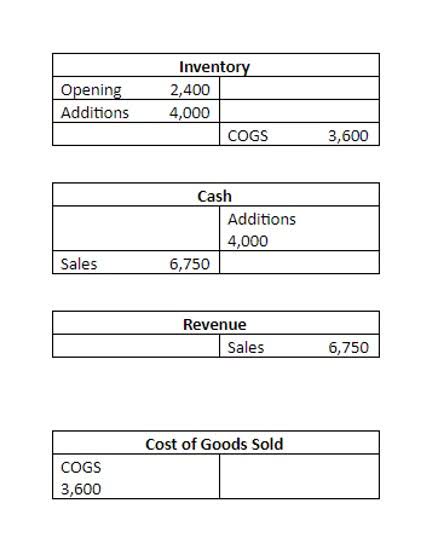
The cost of this sale will be the cost of the 10 units of inventory sold which is $250 (10 units x $25). The difference between the $400 income and $250 cost of sales represents a profit of $150. The inventory (asset) will decrease by $250 and a cost of sale (expense) will be recorded.

What is the nature of capital accounts? Is it an asset or a liability?

In addition to raising capital by taking on debt, companies can also sell shares. In this case, the company owner or owners offer a percentage of business ownership in return for capital. As you can imagine, investing capital gets complicated for large companies. To counter this complexity, businesses set up capital structures designed to help them invest wisely. They use these structures to assess their capital needs and thresholds.

The accounting equation ensures that the balance sheet remains balanced. Capital is the owner’s claim against the assets of the business and is equal to total assets less all liabilities to external parties. The balance in capital account increases with the introduction of new capital and profits earned by the business and decreases as a result of withdrawals and losses sustained by the business. Owner’s capital, often referred to as owner’s equity or shareholder’s equity for corporations, comprises several distinct components on a company’s balance sheet. A primary component is contributed capital, also known as paid-in capital, which represents the funds directly invested by the owners into the business. This includes money received from the issuance of common stock or preferred stock to shareholders.

  • Think of retained earnings as savings, since it represents the total profits that have been saved and put aside (or “retained”) for future use.
  • In this case, buying a building, paving a parking lot or renovating an office would all be capital expenses that improve assets.
  • Capital in accounting represents the financial strength and investment of owners in a business.
  • This example gives us a small view of how companies aim to use capital – to create value.
  • We shall first look into the key constituents of the head ‘sources of funds’, after which we will cover the head ‘application of funds’.

Besides these, any revenue received in advance is also a liability of the business and is known as unearned revenue. For example, a marketing firm may receive marketing fee from its client for the forthcoming quarter in advance. Such unearned revenue would be recorded as a liability as long as the related marketing services against it are not provided to the client who has made the advance payment. Another important concept is capital asset management planning. It evaluates current and prospective capital requirements and establishes efficient initiatives to satisfy those needs.

is capital an asset or liability

This classification is due to the expectation of future benefits in the form of cash flow. As an owner of the company, the holder of capital stock has a claim on the company’s assets and earnings. This gives the holder the right to receive a share of the company’s profits through dividends. This means they have the right to receive a share of the company’s profits through dividends. The company receives capital stock as a result of selling ownership interests to investors in exchange for capital.

Income accounts are temporary or nominal accounts because their balance is reset to zero at the beginner of each new accounting period, usually a fiscal year. As a Chartered Accountant with over 12 years of experience, I am not only skilled in my profession but also passionate about writing. I specialize in producing insightful content on topics like GST, accounts payable, and income tax, confidently delivering valuable information that engages and informs my audience. Cash (asset) will reduce by $10 due to Anushka using the cash belonging to the business to pay for her own personal expense. As this is not really an expense of the business, Anushka is effectively being paid amounts owed to her as the owner of the business (drawings). $10,000 of is capital an asset or liability cash (asset) will be received from the bank but the business must also record an equal amount representing the fact that the loan (liability) will eventually need to be repaid.

○ Contribution (Money Invested)

Capital is generally considered a liability because a business must repay the capital’s owner. For instance, debt capital requires regular loan repayments, often to financial institutions. Equity capital requires the payment of dividends coupled with good performance in return for capital investment. An investor won’t stay around for long if the company isn’t performing.

But it should not be excessive since capital as long-term assets has a higher return. The excess of the bank’s long-term assets over its long-term liabilities measures its solvency, its ability to continue as a going concern. The items included in the latter category are specifically mentioned in the definition of the former as exclusions.

  • Check with your insurance company to see if your current policy covers all of your assets – you might need to buy extra to cover assets like collections or art.
  • Assets are resources that a business owns and uses to produce income in accounting.
  • Companies will use long-term debt for reasons like not wanting to eliminate cash reserves, so instead, they finance and put those funds to use in other lucrative ways, like high-return investments.
  • In corporate form of business there are many owners known as stockholders or shareholders and the title capital stock account is used to record any change in the capital.
  • Beyond money, capital assets can refer to a company’s manufacturing equipment and physical facilities.

Application and Integrity of the Accounting Equation

Expenses are the costs required to conduct business operations and produce revenue for the company. Assets are a representation of things that are owned by a company and produce revenue. Liabilities, on the other hand, are a representation of amounts owed to other parties. Both assets and liabilities are broken down into current and noncurrent categories.

From the accounting perspective, Capital is a liability because the business is obliged to repay its owner. The simple meaning of capital, as known by many, is the sum of money invested in the business by the owner/shareholder/partners. That is, each entry made on the debit side has a corresponding entry (or coverage) on the credit side. The accounting equation states that a company’s total assets are equal to the sum of its liabilities and its shareholders’ equity.

How to Create an Invoice With Partial Payment Request

These accounts have different names depending on the company structure, so I list the different account names in the chart below. If I purchase a $30,000 vehicle (asset) with a $25,000 loan (liability) and $5,000 in cash (equity), I’ve acquired an asset of $30,000, but have only $5,000 of equity in the asset. Examples of liability accounts that display on the Balance Sheet include Accounts Payable, Sales Tax Payable, Payroll Liabilities, and Notes Payable. Because of their higher costs and longevity, assets are not expensed, but depreciated, or “written off” over a number of years according to one of several depreciation schedules. Assets can be defined as objects or entities, both tangible and intangible, that the company owns that have economic value to the business. Now let’s look a closer look at each of these basic elements of accounting.

This calculation is often linked with Types of Vouchers in record-keeping. Understanding accounting principles is essential for accurate capital reporting. Capital stock is a fundamental component of a company’s financial structure, and understanding its classification is crucial for accurate financial reporting. The Pauper’s Money Book shows how you can manage your money to greatly increase your standard of living.

What is a balance sheet: Definition & examples for 2025

what is a balance statement

For example, if outflows exceed inflows, then the demand for the currency in the domestic market is likely to exceed the supply in the foreign exchange market, all else being equal. One can thus infer that the currency would be under pressure to depreciate against other currencies. On the other hand, if inflows exceed outflows, then its currency what is a balance statement would be likely to appreciate.

Current assets typically include cash and accounts receivable, while non-current assets may consist of property and equipment. On the other hand, liabilities represent obligations owed to others, which can also be categorized as current and long-term. For a clear accounting sheet example, accurate categorization is key, as it significantly affects the overall balance statement sample.

Sometimes liabilities (and stockholders’ equity) are also thought of as sources of a corporation’s assets. For example, when a corporation borrows money from its bank, the bank loan was a source of the corporation’s assets, and the balance owed on the loan is a claim on the corporation’s assets. In the accounting period when the items in inventory are sold, the cost of the items sold is removed from the asset inventory and is reported on the income statement as cost of goods sold. The balance sheet is one in a set of five financial statements distributed by a U.S. corporation. To get a complete understanding of the corporation’s financial position, one must study all five of the financial statements including the notes to the financial statements. When analyzing your business, understanding balance sheets marks the first step.

This change affects annual periods starting on or after 01 January 2027. To fit this definition, they must be easy to convert to cash or so close to maturity that the risk of valuation changes are low. IFRS places non-operating non-cash investing activities in a footnote.

It is also possible, however, that the upward pressure on prices from tariffs could spur a more lasting inflation dynamic, and that is a risk to be assessed and managed. One possibility is that workers, who see their real incomes decline because of higher prices, demand and get higher wages from employers, setting off adverse wage–price dynamics. Given that the labor market is not particularly tight and faces increasing downside risks, that outcome does not seem likely.

A balance sheet is one of the most essential tools in your arsenal of financial reports. It’s used to state a business’s assets, liabilities, and shareholder’s equity at a given point in time, offering a snapshot of everything your business owns and owes and telling you the business’s overall worth. Generally speaking, balance sheets are instrumental in determining the overall financial position of the business. This financial statement reports the amounts of assets, liabilities, and net assets as of a specified date. This financial statement is similar to the balance sheet issued by a company. The two “turnover” ratios in the above list highlight that it is not sufficient to merely have accounts receivable and inventory.

The book value is the value of a company’s assets minus its liabilities. The book value is an important metric for investors who want to assess the value of a company. These financial statements can only show the financial metrics of your company at a single moment in time.

What is the purpose of a balance sheet?

The unemployment rate, while edging up in July, stands at a historically low level of 4.2 percent and has been broadly stable over the past year. Other indicators of labor market conditions are also little changed or have softened only modestly, including quits, layoffs, the ratio of vacancies to unemployment, and nominal wage growth. Labor supply has softened in line with demand, sharply lowering the “breakeven” rate of job creation needed to hold the unemployment rate constant. Indeed, labor force growth has slowed considerably this year with the sharp falloff in immigration, and the labor force participation rate has edged down in recent months. Current Economic Conditions and Near-Term OutlookWhen I appeared at this podium one year ago, the economy was at an inflection point. Our policy rate had stood at 5-1/4 to 5-1/2 percent for more than a year.

what is a balance statement

This position may be temporary—and it may reverse once the repayment period begins. A comparison shows if the business is growing, going through a period of decline, or transitioning between these two states. Although these two sets of guidelines are similar, they differ in how they classify various reporting activities.

  • A current asset account that represents an amount of cash for making small disbursements for postage due, supplies, etc.
  • A formal written promise to pay interest every six months and the principal amount at maturity.
  • Pay attention to the balance sheet’s footnotes to determine which systems are being used in their accounting and to look out for any red flags.

Video on Balance Sheet

When you combine these two amounts, the total should match your assets. This balance shows that your financial records are accurate and everything is accounted for. If the totals don’t match, double-check your figures to ensure nothing was left out or miscalculated.

Prepaid Expenses:

  • The total amount of shareholders’ equity is the leftover amounts from assets and liabilities as well as from business operations.
  • There is also a misconception that a company’s liabilities are a reflection of its financial health.
  • This section of the statement shows how much cash the company generates from buying or selling investments or assets.
  • Like assets, liabilities can be categorized into current and non-current.
  • By avoiding common misunderstandings, investors and analysts can make more informed decisions about a company’s financial health.

While reporting requirements vary, all companies should maintain accurate financial records to support decision-making and ensure compliance. Financial statements are vital to inform decision-making for leadership, investors and creditors. You can find details about a company’s debt in its quarterly report (10Q) and annual report (10K). It should include details like when the debt is due and how high the interest rate on the debt is. Non-current liabilities are things that the company owes that are due after more than one year.

This component reflects the ownership stake of shareholders in the firm. An accounting sheet example often provides clarity regarding equity through items like common stock, retained earnings, and additional paid-in capital. These three components are integral to the overall balance statement format, as they encapsulate the financial standing of an organization, offering insight into its operational efficiency and financial stability.

When the allowance account is used, the company is anticipating that some accounts will be uncollectible in advance of knowing the specific account. As a result the bad debts expense is more closely matched to the sale. When a specific account is identified as uncollectible, the Allowance for Doubtful Accounts should be debited and Accounts Receivable should be credited. The credit balance in this account comes from the entry wherein Bad Debts Expense is debited. The amount in this entry may be a percentage of sales or it might be based on an aging analysis of the accounts receivables (also referred to as a percentage of receivables).

For example, a positive change in plant, property, and equipment is equal to capital expenditure minus depreciation expense. If depreciation expense is known, capital expenditure can be calculated and included as a cash outflow under cash flow from investing in the cash flow statement. This account includes the total amount of long-term debt (excluding the current portion, if that account is present under current liabilities). This account is derived from the debt schedule, which outlines all of the company’s outstanding debt, the interest expense, and the principal repayment for every period. Overall, a balance sheet is an important statement of your company’s financial health, and it’s important to have accurate balance sheets available regularly.